
The past week brought significant milestones in the world of space exploration and science, underscoring humanity's ambitions and technological advancements. From successive satellite launches to vigorous solar activity, the headlines reflected the continually expanding frontier of astronomical research and commercial spaceflight. Notably, SpaceX intensified its Starlink deployment, furthering global internet connectivity and breaking a state launch record, while NASA's preparations for a Mars mission revealed the agency's commitment to bold new scientific investigations. Meanwhile, a record-breaking supermoon captivated skywatchers, comet 3I/ATLAS fueled scientific speculation, and Europe celebrated a vital satellite launch enhancing climate monitoring. Solar storms led to a heightened awareness of geomagnetic impacts, and research missions promised new insights into planetary atmospheres and magnetic fields. Altogether, these stories highlight accelerating innovation and exploration, the interplay of commercial and scientific space ventures, and an energized global focus on the cosmos.
COPERNICUS SENTINEL-1D SATELLITE LAUNCH SPURS CLIMATE RESEARCH
A new European Earth-observation satellite, Copernicus Sentinel-1D, was launched aboard the Ariane 6 rocket. This venture aims to revolutionize climate and environmental data collection, providing high-resolution imagery and advanced monitoring capabilities. Scientists anticipate valuable insights into changing weather patterns and landscape transformations, supporting efforts to address climate change. The launch marks a step forward in Europe's growing leadership in space-based environmental research. Ariane Space
STARLINK SATELLITES EXPAND GLOBAL INTERNET ACCESS
SpaceX successfully launched 28 Starlink satellites from California, maintaining its rapid pace for expanding global broadband coverage. These satellites form a vital part of the project's goal to deliver affordable, high-speed internet to even the most remote regions. The continuous deployment highlights SpaceX's commitment to transforming connectivity and communication worldwide. This week's addition brings the annual total over 2,600 satellites and solidifies SpaceX's dominance in commercial satellite launches. Space.com | Space Flight Now
SUPERMOON AND PLANETARY PARADE DAZZLE OBSERVERS
Astronomy enthusiasts witnessed the largest supermoon of 2025, a celestial spectacle featuring Saturn and Jupiter's close approach in the night sky. The event drew global attention, offering both stunning visuals and unique opportunities for amateur observation. Astronomers noted increased interest in lunar science and planetary movements, with skywatchers reporting exceptional clarity and detail. Such events not only inspire wonder but also foster public engagement with astronomy. Space.com | Palm Beach Post
COMET 3I/ATLAS SPARKS SCIENTIFIC CURIOSITY
The green-glowing comet 3I/ATLAS continued to intrigue scientists and the public with recently published images and ongoing analysis. Researchers speculated about its origins and trajectory, fueling discussions on interstellar objects within our solar system. The comet's brightness and unique characteristics have made it a focal point for both professional and amateur astronomers. Its study could shed light on the formation and evolution of celestial bodies crossing planetary boundaries. LiveScience
GEOMAGNETIC STORMS HIGHLIGHT SOLAR ACTIVITY
A powerful geomagnetic storm watch was issued for several days, prompted by a substantial coronal mass ejection affecting Earth's magnetic field. This phenomenon generated remarkable auroras and had potential impacts on satellite operations and navigation systems. Space weather experts have monitored heightened solar activity closely, informing the public about risks and the spectacular visual displays. The event reaffirmed the importance of timely space weather forecasting for technology-dependent societies. NOAA
NASA PREPARES MARS RESEARCH MISSION
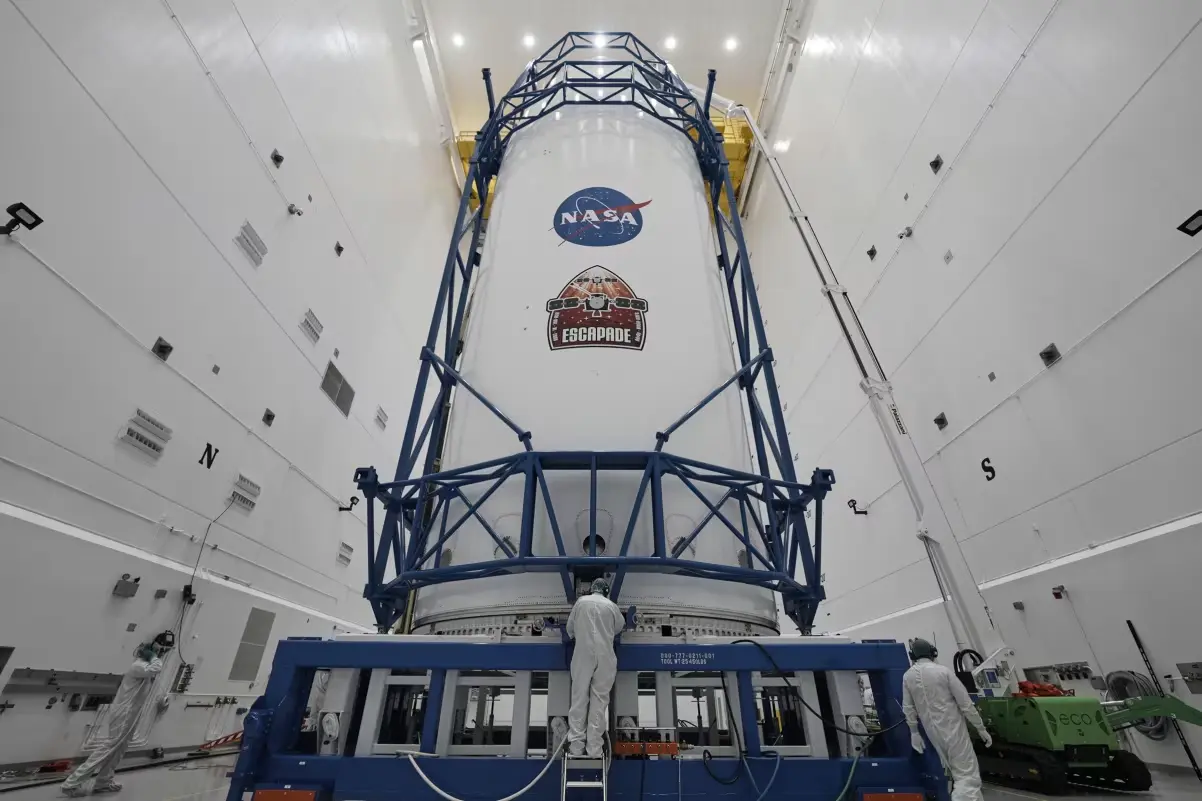
NASA advanced its Mars ambitions with the imminent launch of twin orbiters, Blue and Gold, in the EscaPADE mission. Aimed at decoding the red planet's magnetic field and atmospheric dynamics, the project represents another leap in planetary science. Researchers expect discoveries that could inform both robotic and crewed missions, shaping future exploration strategies. Preparations for liftoff captivated scientific communities and highlighted international collaboration in space research. CNN | Berkeley | Phys.org
SPACEX SETS FLORIDA LAUNCH RECORD
Florida solidified its position as the leading global spaceport when SpaceX’s Falcon 9 completed its 94th orbital mission this year. The achievement surpassed previous launch records and underscored the state's pivotal role in commercial and governmental space endeavors. This growth points to increased investments in infrastructure and workforce development. The milestone demonstrated SpaceX’s growing influence and the vibrancy of American aerospace innovation. Space Flight Now
ONGOING SOLAR STORMS KEEP AURORAS IN VIEW
Solar storm activity remained elevated throughout the week, with continuing geomagnetic disruptions and auroras visible at high latitudes. Observers reported spectacular lights and monitored potential technological impacts, raising awareness of space weather’s influence on Earth. These conditions persisted, prompting further study and public communication about solar phenomena. The interest in geomagnetic events illuminates the importance of interdisciplinary cooperation between meteorologists and physicists. LiveScience