
Over the last week, space activity has centered on human spaceflight safety, satellite launches, and key science missions. NASA is preparing the first-ever medical evacuation from the International Space Station, returning Crew-11 early after a health concern with one astronaut. SpaceX continued its rapid Falcon 9 launch cadence with another Starlink deployment, expanding the already massive broadband constellation in low Earth orbit. NASA’s new Pandora satellite confirmed contact after launch, clearing a major milestone for exoplanet atmosphere research. Space policy events are shaping NASA’s upcoming budget and planetary defense priorities, including NEO Surveyor and Apophis-focused missions. Together, these developments highlight how astronaut health, commercial launch capability, and advanced science missions are converging to define this week in space.
NASA PREPARES FIRST MEDICAL EVACUATION FROM ISS
NASA is conducting the first medical evacuation from the International Space Station, returning the four-person Crew-11 mission to Earth ahead of schedule. The decision follows a medical issue affecting one astronaut on January 7, prompting NASA and SpaceX to target undocking on January 14 and splashdown off California early January 15, pending weather and recovery conditions.
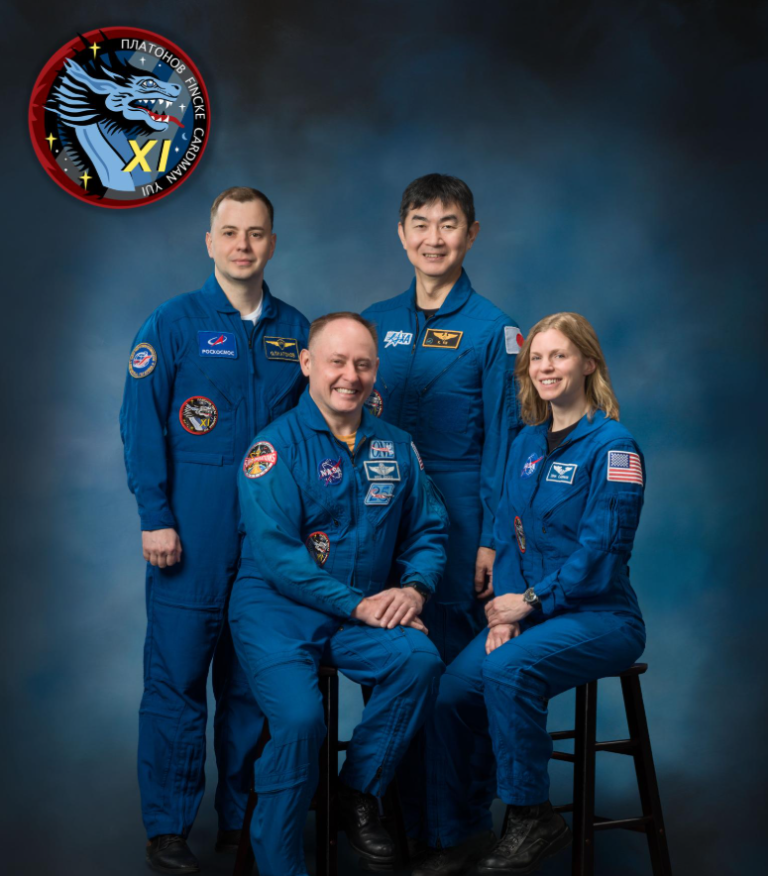
The Crew-11 team—Zena Cardman and Mike Fincke of NASA, Kimiya Yui of JAXA, and Oleg Platonov of Roscosmos—will ride the SpaceX Dragon Endeavour capsule home. NASA has already held or scheduled change-of-command and landing coverage events, including a January 12 ceremony broadcast on NASA TV and streaming platforms to mark the leadership transition on the station.
Multiple NASA and SpaceX mission updates confirm that Dragon will deorbit several hours after undocking, with splashdown targeted for about 3:40 a.m. EST on January 15 off the California coast. Weather in the splashdown zones is being monitored closely, with NASA reporting generally favorable conditions so far for the earlier-than-planned landing scenario.
This evacuation underscores NASA’s emphasis on astronaut health protocols and contingency planning in long-duration missions on the orbiting laboratory. It also demonstrates the flexibility of commercial crew vehicles like Dragon, which can be retasked for urgent returns while still ensuring safe reentry and recovery operations. Space.com
SPACEX FALCON 9 LAUNCHES 29 MORE STARLINK SATELLITES
SpaceX executed another Falcon 9 launch carrying 29 Starlink satellites, marking the company’s fifth Falcon 9 mission of 2026 and sustaining a launch rhythm faster than one every 2.5 days. Liftoff occurred from Space Launch Complex 40 at Cape Canaveral Space Force Station at 4:08:20 p.m. EST on January 11, sending the Starlink 6-97 batch into low Earth orbit.
The mission deployed 29 Starlink V2 Mini Optimized satellites, further enlarging SpaceX’s global broadband constellation in low Earth orbit. According to orbital statistics compiled by astronomer Jonathan McDowell, more than 9,400 satellites are currently in low Earth orbit as of January 11, reflecting rapid growth driven largely by mega-constellations like Starlink.
Following stage separation, the Falcon 9 first stage executed a standard boostback, entry, and landing profile, enabling its reuse on future missions and supporting SpaceX’s cost-saving reusability model. SpaceX later confirmed successful deployment of the full Starlink payload, completing another incremental step toward expanded global internet coverage.
This launch continues SpaceX’s strategy of frequent, relatively small Starlink batches to maintain flexibility in both launch operations and constellation configuration. The increasing density of satellites in low Earth orbit, meanwhile, is driving parallel discussions in the space community about traffic management, collision avoidance, and orbital debris mitigation. Spaceflight Now
NASA’S PANDORA EXOPLANET SATELLITE ACQUIRES SIGNAL AFTER LAUNCH
NASA’s Pandora small satellite successfully acquired signal on January 11 during its first ground pass after liftoff from Vandenberg Space Force Base in California. Mission controllers reported full acquisition of signal from the spacecraft, confirming that Pandora is healthy in orbit and ready to begin commissioning activities.
Pandora is designed to study exoplanets—planets orbiting stars outside our solar system—by analyzing how their atmospheres absorb starlight during transits. The mission will focus on disentangling the signals from exoplanet atmospheres and their host stars, improving understanding of atmospheric composition and helping refine measurements of gases like water vapor and other key molecules.
By leveraging data from earlier discovery missions and adding high-precision follow-up observations, Pandora will help characterize a diverse sample of exoplanets. These observations are expected to inform broader questions about how planetary atmospheres form, evolve, and respond to stellar activity, which is critical for assessing habitability.
The successful signal acquisition marks a major early milestone for the mission and sets the stage for instrument checkout and calibration. Once fully operational, Pandora will contribute to a growing fleet of space telescopes and small satellites targeting exoplanet science, complementing missions like TESS and the James Webb Space Telescope. NASA
SPACE POLICY WEEK: NASA BUDGET, CREW-11 RETURN, AND PLANETARY DEFENSE FOCUS
The week of January 11–17, 2026 is active for space policy, with events highlighted by SpacePolicyOnline, including NASA’s early Crew-11 splashdown and key budget decisions. One major focus is the unexpected early return of the Crew-11 mission from the International Space Station due to a medical concern, with multiple public briefings and coverage planned.
Another potentially significant development is possible Senate passage of the final NASA spending bill for fiscal year 2026, which will shape funding across human spaceflight, science, and technology programs. Committee meetings and briefings scheduled this week also touch on astronomy and astrophysics priorities, informing longer-term strategic planning for major observatories.
The Small Bodies Assessment Group (SBAG) is holding sessions on the interstellar comet 3I/ATLAS and updates on planetary missions from NASA and international partners. Special attention is given to two missions that will study the near-Earth asteroid Apophis during its close Earth flyby in April 2029: Europe’s RAMSES mission and NASA’s OSIRIS-APEX, an extended mission from OSIRIS-REx.
An update on NASA’s NEO Surveyor mission, a dedicated infrared space telescope to detect and characterize potentially hazardous near-Earth objects, is also on the agenda. Together, these discussions reflect rising emphasis on planetary defense, small body science, and prioritization of limited resources in NASA’s future portfolio. Space Policy Online
ISS CREW-11 RETURN PLANS DETAIL NASA’S MEDICAL EVACUATION OPERATIONS
Additional reporting on the Crew-11 situation provides more detail on how NASA and SpaceX will execute this first ISS medical evacuation. Crew-11’s SpaceX Dragon Endeavour spacecraft is scheduled to undock no earlier than the evening of January 14, with a targeted splashdown off California in the early hours of January 15, subject to weather and recovery constraints.
NASA and SpaceX mission updates describe a timeline that includes deorbit burn around 2:50 a.m. EST and splashdown at about 3:40 a.m. EST, followed by a post-landing press conference at 5:45 a.m. EST. The landing will be covered live on NASA TV, NASA+, and associated streaming platforms, extending transparency about the medical evacuation process.
This operation uses standard Dragon recovery procedures but under accelerated scheduling, demonstrating the spacecraft’s role as a flexible lifeboat for ISS crews. NASA has emphasized that the health issue is not life-threatening but nonetheless warrants an early return to ensure proper care on Earth, illustrating conservative medical risk management in orbit.
The event is also shaping space policy discussions this week, with Crew-11’s early return explicitly highlighted among key happenings for lawmakers and stakeholders. Lessons from this evacuation may influence future medical protocols, crew rotation planning, and contingency requirements for commercial crew vehicles operating in low Earth orbit. Space.com